3 Basic Types of Breathwork
Thoracic and cardiovascular surgeon, Alan Hymes describes three basic types of breathwork:

Diaphragmatic
Diaphragmatic breathing is treated as the most efficient as it fills the lower parts of the human lungs where there is far more blood concentration or flow to receive the oxygen.

Thoracic
Commonly called chest breathing, it fills the middle and upper portion of the lungs only.
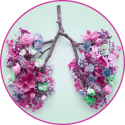
Clavicular
Clavicular breathing is said to be the best way to maximize the inhaling or intake of air by pulling up the clavicles or collarbones.
Types of Breathwork
Among the several types and sub-types of breathwork, followings have more prominent features and more popular among the practitioners and trainers/ trainees:
Rebirthing Approach
Rebirthing is a type of breathwork which is used to release the suppressed traumatic childhood memories. Orr is of the view that correct method of breathing can cure typical disease and can help to release pain. Rebirthing therapy was devised and developed by Orr in 1970s when he said to relive his own birth while he was in the bath.
In 2006, a panel of over one hundred breathwork experts participated in a survey of psychological treatments and discredited the rebirthing therapy.

Holotropic Breathwork
Holotropic breathwork was developed by Stanislav Grof as a result of his LSD-based psychedelic therapy in 1960s. It is applied as rapid breathing and other elements such as music to put individuals in altered states of consciousness. As side effects of holotropic breathwork, such as, hyperventilation, can cause cramping in the hands and around the mouth, it is advised not to attempt it alone.
Created and developed by Jim Leonard and Phil Laut, this is a breathwork type which is used for the improvement of wellbeing of practitioners by applying the use of circular breathing.
Vivation Approach
Others Types of Breathwork
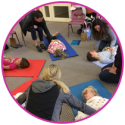
Integrative
Breathwork
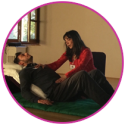
Transformational
Breathwork

Shamanic
Breathwork

Conscious Connected
Breathing
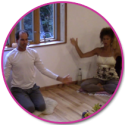
Radiance
Breathwork

Zen Yoga
Breathwork
Different Levels of Breathwork
To get the best results, the breath work adopts a powerful and strong therapeutic modality. To get the best results, it is applied to work on different levels, which are:
The Physical Level

The Emotional or Psychological Facilitation Level